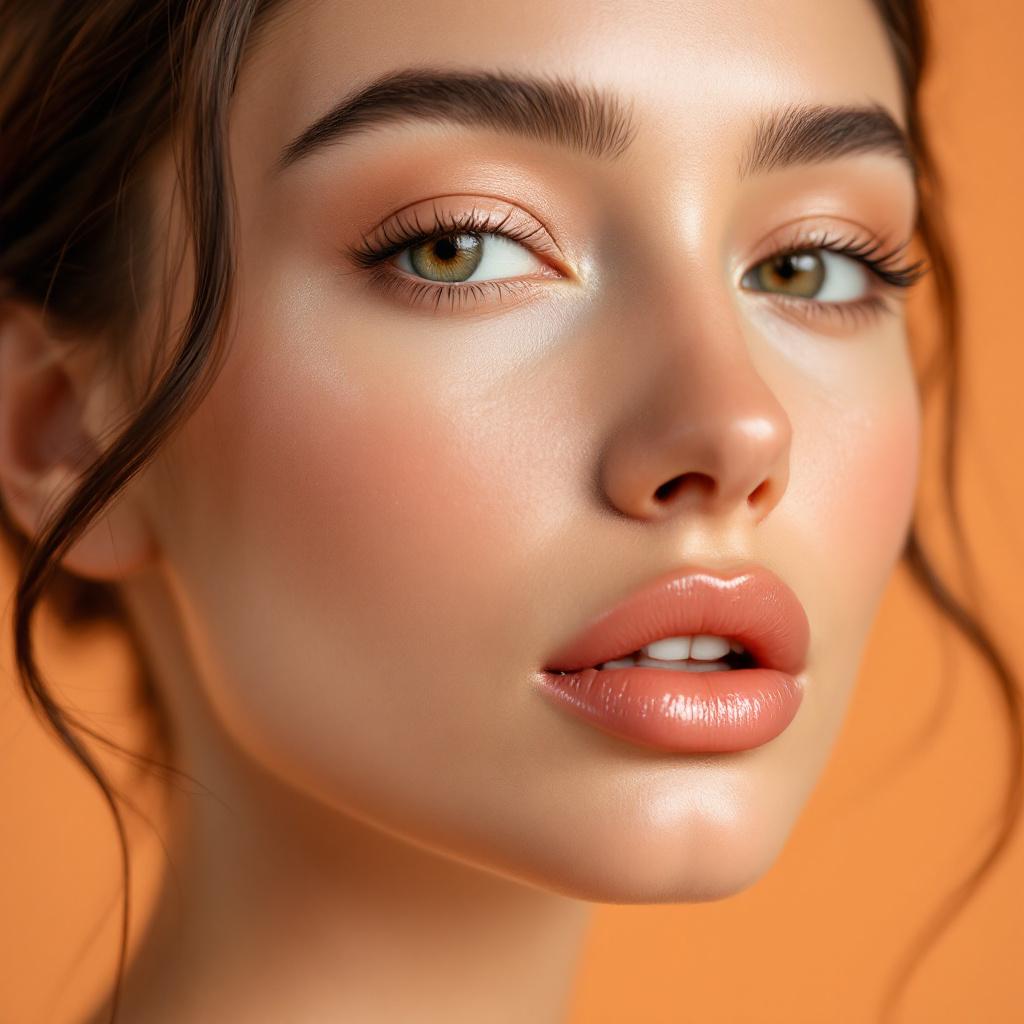
There is something quietly revolutionary about the beauty industry's latest pivot - and also, if one is being entirely honest, something that speaks to its extraordinary talent for finding commercial opportunity in the side effects of other commercial opportunities. The GLP-1 economy has given us smaller waistlines and a great deal of cultural conversation. It has also, less glamorously, given a significant number of its most enthusiastic adopters what the industry has taken to calling "Ozempic face" - that particular constellation of accelerated aging that accompanies rapid weight loss: hollowed cheeks, a loosening jaw, skin that seems suddenly several sizes too large for the face it sits upon.
The numbers are not trivial. Approximately 15 percent of American adults are now estimated to be taking some form of GLP-1 medication, with usage in the UK tracking closely behind. These are, by and large, exactly the sort of women who also spend $134 on a serum. The skincare industry, with the finely-tuned commercial instincts that have sustained it through recessions, pandemics and seventeen separate rosewater trends, has noticed.
The Brief Edit
Beauty reformulations, trend shifts and buying guidance. Twice a week, free.
The most prominent of the new crop of GLP-1 targeted products is Image Skincare's Volulift - a serum that bills itself, with admirable ambition, as a "GLP-1 4D Skin Rebound Complex." The formula deploys a combination of peptides, retinol alternative and what Image calls its proprietary plumping complex to address the specific texture changes - thinning, sagging, the disappearance of what dermatologists more clinically term "facial adipose tissue" - associated with medication-assisted weight loss. At $134, it is neither the most nor least expensive solution on the market. It is, however, the one that has most aggressively positioned itself as category-defining.
"The skin doesn't know it's supposed to be grateful for the weight loss. It simply registers the loss of structural fat and responds accordingly - with all the enthusiasm of a deflating balloon."
Dr. Rikesh Parikh, a Beverly Hills-based plastic surgeon who has treated a significant number of post-GLP-1 patients, explains the mechanism plainly: "Rapid fat loss anywhere in the body affects the face - particularly in the buccal fat pad, the temples, and the periorbital area. The skin doesn't know it's supposed to be grateful for the weight loss. It simply registers the loss of structural fat and responds accordingly." With fat transfers, facelifts, Sofwave, EmFace, and radiofrequency microneedling - the clinical heavy artillery - frequently beyond budget for many patients, the appeal of a $134 topical solution is self-evident, even if its efficacy invites more nuanced discussion.

Clinique's new Smart Clinical Repair serum has been formulated for those who've given up on retinol. Dermatologist-tested. Genuinely remarkable.
Discover more →What the Science Actually Says
The honest position on GLP-1 targeted skincare is this: the specific claims are new, but the underlying science is not. Peptides have long been formulated to stimulate collagen production and restore firmness. Hyaluronic acid plumps. Retinoids accelerate cell turnover and address laxity. What the new generation of products like Volulift is doing - cleverly, one must concede - is packaging established actives under a narrative that speaks directly to a contemporary consumer experience. Whether the formulas are materially different from a good vitamin C serum and a solid retinol, or simply better marketed, is a question worth asking.
That said, the dermatologists we spoke to were neither dismissive nor uncritical. The consensus position is something like: these products will not replace clinical intervention for significant volume loss, but for patients in the earlier stages of facial change, or those maintaining results after more invasive treatment, a high-quality peptide-led formula is a rational addition to a routine. The face you have at sixty-three will be meaningfully different depending on the skincare you did at fifty-three. The mechanism of fat loss does not change that calculus.
The Clinical Alternatives
For those whose Ozempic face has progressed beyond what a serum can credibly address, the clinical landscape has expanded considerably. Sofwave, which uses synchronised ultrasound technology to heat the dermis and stimulate collagen production without damaging the skin's surface, has become a favoured option among dermatologists for its combination of efficacy and minimal downtime. EmFace, the radiofrequency and HIFES muscle stimulation device, is being used to address both skin laxity and the muscle atrophy that accompanies it - a dual concern that the new cohort of GLP-1 patients has brought into sharper focus.
Radiofrequency microneedling, meanwhile, remains the workhorse treatment for significant skin laxity - more aggressive than either of the above, with a commensurately longer recovery, but delivering results that topical products simply cannot replicate. Dr. Barbara Sturm's clinic, which has treated a number of high-profile patients navigating post-GLP-1 skin concerns, recommends a protocol that combines in-clinic treatment with a home maintenance routine - the latter built around retinoids, growth factors, and hydration.
The Question of Narrative
What is perhaps most interesting about the emergence of this new skincare category is not the products themselves but what they signal about the beauty industry's relationship with the pharmaceutical one. GLP-1 medications began as a diabetes treatment, became a weight-loss revolution, and have now spawned their own cosmetic aftermarket - a full ecosystem of products, treatments and concerns that did not exist three years ago.
There is something to admire in the industry's agility, and something to raise an eyebrow at. The same medications that have been marketed as transformative health tools are now generating revenue for the skincare industry by addressing the consequences of their use. It is, as the saying goes, turtles all the way down. Whether Volulift and its growing cohort of competitors represent genuine innovation or sophisticated repositioning of existing products is a question that will be answered, as most beauty questions are, by whether they actually work. Consumer reviews, thus far, are cautiously positive. Dermatologists are professionally measured. The market, characteristically, is moving ahead regardless.
What we know with certainty: if you are one of the millions taking a GLP-1 medication and have noticed changes in your facial skin, you are not imagining them, and you are not alone. Whether the answer is a $134 serum, a course of Sofwave, or simply a more diligent approach to the SPF and retinol you probably already own, the tools exist. The conversation, at least, has finally started.