Why this matters
Iridescent hair is showing up at high-profile events and in salon books, so clients will soon be asking stylists for pearly, shifting finishes. For readers who invest in premium color, knowing the technical process and maintenance prevents disappointment and ensures the effect looks luxurious rather than gimmicky.
Pearlescence has left the nail salon and arrived at the hair chair. If you want iridescent hair color, know this: it is a nuanced, often slow-burn kind of glamour that rewards patience and precision, not impulse selfies in harsh bathroom light.
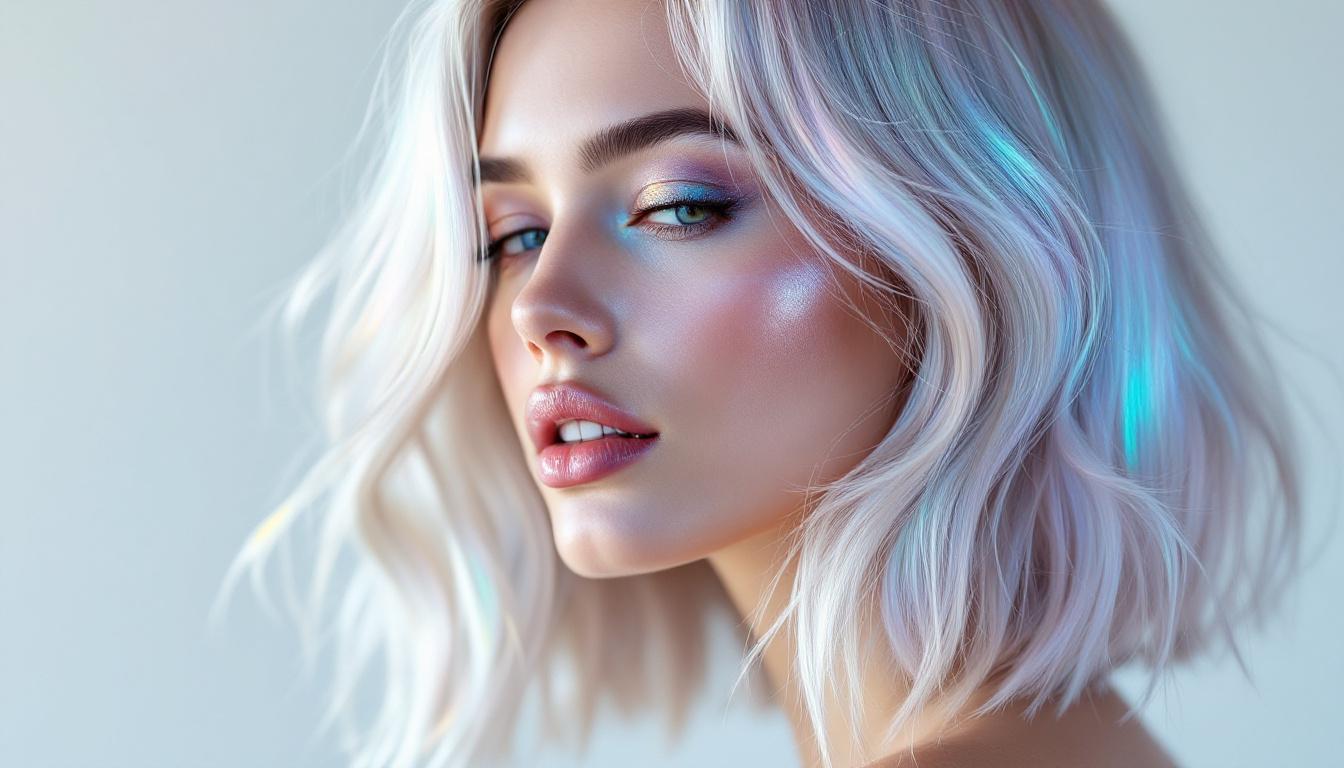
The mother-of-pearl hair moment is an obvious cross-category lift from the runway and red carpet, where opalescent nails have been everywhere. Stylists are translating that same chrome hair finish and milky shimmer into salon services that read luxe rather than gimmicky. But getting that pearlescent sheen requires a plan: the right base, thoughtful lightening, and a glazing step that gives hair that wet, lustrous shift between silver, pink, blue and champagne.
The Brief Edit
Beauty reformulations, trend shifts and buying guidance. Twice a week, free.
What mother-of-pearl hair actually looks like
Think of natural mother-of-pearl: layers of light folding and refracting into soft color. On hair that can mean anything from an ethereal opalescent hair color on a porcelain blonde, to a chrome finish layered over a very dark base for vampy, reflective edge. The key is dimension. Pure flat silver is not the point. You want soft lowlights, whisper-thin highlights and a reflective topcoat that gives the impression of depth and movement when you turn your head.
Pearl hair dye is not one single tube in the back bar. It is a combination of lift, babylights or micro-foils, and a tonal glaze composed of pearlizing pigments. The outcome reads iridescent, not neon. On warmer complexions a milky champagne opal gives a flattering glow. Cooler tones lean into silvery lavender or pale ash with a cool blue flash. And if you love contrast, a chrome hair finish over a shadowed root creates that glassy, almost liquid look without needing a full-face platinum.
Salon techniques that produce the sheen
This is where a great colorist separates the dream from the disaster. The foundational move is controlled lift: babylights or a finely woven foilayage that creates a canvas of micro-dimensions, not chunky highlights. Then comes the glaze. Colorists mix demi-permanent toners with pearlizing additives or metallic-reflective pigments to build the finish. Sometimes they use two glazes layered one after the other to coax multidimensional shine.
Bond-builder treatments during lift are essential. You are asking hair to go through chemical changes so protecting the cortex prevents breakage and gives you better longevity. Expect multi-step appointments: lightening that can take two to three hours, a break, then a glossing session that can take another 30 to 60 minutes. If your hair is naturally dark and you want a chrome finish, be prepared for staged lifts across weeks, not a single afternoon miracle.
Mother-of-pearl hair only reads luxurious when your colorist plans lift, tone and finish like a three-course meal, not a rushed afterthought.
Shade choices and who should consider this
Not every base reads the same. Best candidates are naturally light blondes or brunettes willing to lift to a pale blonde. A porcelain or ash base allows the pearl pigments to flip between hues. For brunettes who want opalescent hair color with less maintenance, a dimensional warm-to-cool balayage that gets lighter around the face and ends will give flashes of pearlescence without full-head platinum.
If you crave a chrome hair finish on dark hair, stylists often use a black or deep brown base paired with strategically placed ultra-fine highlights and then deposit metallic glosses to create reflectivity. It is sophisticated but heavy on stylist skill, and not all salons stock the pigments required for convincing chrome effects. Don’t try to force a shade on hair that cannot be lifted further without major damage.
Realistic upkeep you actually need to know
Here is the blunt truth: opalescent hair color fades differently than traditional dyes. The pearlescent reflections live on the surface and in the mid-band of tone, so they dull with surfactant-heavy shampoos, hard water, heat styling and sun. A color-depositing gloss will keep things luminous between salon visits, but plan on refreshes every 4 to 8 weeks if you want that chrome-gloss effect to read fresh. Demi-permanent glazing lasts longer than direct pigments, but even demi fades into a softer patina over two months.
At home, use sulfate-free color-safe shampoos and cool water. Rotate a purple or violet-based shampoo only if your base needs brass control, because too much violet can blunt those warm opal flashes. Invest in a leave-in heat protector and limit hot tools. Add a weekly color-depositing conditioner to revive tone and a shine mist with UV filters for sunny days. And budget for bond-builder treatments periodically to keep hair healthy under repeated lifts.
Time and money matter. Expect first visits to run three to five hours and cost more than a standard balayage. Maintenance glosses for tone and shine are shorter and less expensive, but they are not optional if you want the exact pearlescent effect you saw on a celebrity. If budget or time are constraints, discuss alternatives with your colorist: a subtle opalescent glaze over existing blonde can give the illusion of mother-of-pearl without full re-lift.
One more practical note: bring images taken in natural light. Indoor flash can flatten the iridescence or create false expectations. Ask to see before-and-after photos from your colorist under daylight so you can imagine how the color will move when you walk outside.
Pearlescent finishes are a soft rebellion against the hyper-saturated, neon era. They reward craft, not speed. If you love the idea of a shifting, reflective mane, pick a salon that understands micro-dimension, carries pearlizing pigments and treats lift as a structural process. Do the upkeep, protect the hair, and you will have something genuinely attention-getting and surprisingly elegant.
Key Takeaways
- Iridescent hair color requires controlled lift, micro-highlights and a pearlized glaze rather than a single "pearl" dye.
- Maintenance includes glosses every 4 to 8 weeks, sulfate-free care, bond-builder treatments and limited heat styling.
- Book a skilled colorist, bring natural-light photos and be prepared for multi-step appointments and higher costs for that chrome finish.
Frequently Asked Questions
What is iridescent hair?
Iridescent hair refers to multi-dimensional color with pearly, opal or chrome-like reflections that shift with light. It’s created by layering translucent tones and glosses to produce a soft sheen rather than a flat pastel or single-tone dye.
How do salons create mother-of-pearl or chrome hair?
Stylists use a mix of lightening, color-melting and demi-permanent glosses or iridescent toners. Technique matters: finely placed highlights, translucent glazes and color-bonding treatments build the sheen without a harsh line of demarcation.
How long does iridescent hair last and how do I maintain it?
The pearlescent effect lasts 6 to 12 weeks depending on base lightness and product choice. Maintain with sulfate-free shampoo, regular color-depositing glosses, heat protection and UV care. Expect salon refreshes for the gloss every 4 to 8 weeks.
Blush Brief editorial is independent. We may include affiliate links; these are always disclosed and do not influence our recommendations.