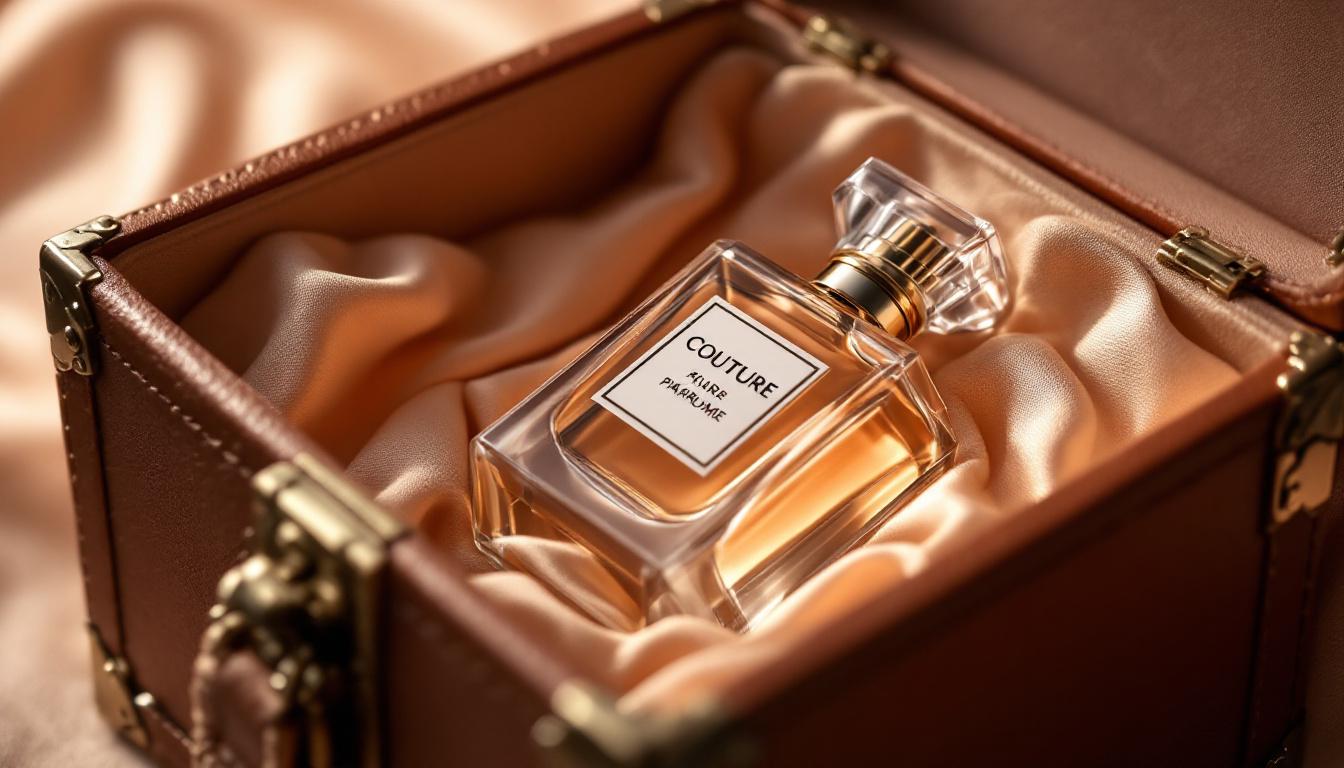
Luxury perfume packaging has quietly become the asset class of fashion's most strategic houses, and the tidy miracle is that the box often matters more than the spray.
Trunks and trompe-l\-oeil: story over spray
Walk into any flagship on Avenue Montaigne or Bond Street this season and you will find trunks perched like reliquaries, trompe-l\-oeil prints that wink at archival patterns, and bottles that arrive nested in micro-suites of tissue and leather. This is not whimsy; it is a carefully choreographed spectacle. Houses like Louis Vuitton, which has been rewarded for calling back to its trunks with the Time Trunk and Monogram Origine launches, treat packaging as narrative propulsion. The object is less a receptacle and more a costume for the scent, and the purchase becomes an act of collecting-an acquisition of story as much as aroma.
The Brief Edit
Beauty reformulations, trend shifts and buying guidance. Twice a week, free.
The surge of collectible perfume bottles is not a passing fancy. Heritage names such as Guerlain and Lalique have long understood that ornament elevates olfaction, but in 2026 a new cast of fashion houses is weaponizing this logic. Trompe-l\-oeil bottles that mimic leather straps, boxes that open like miniature chests, and labels that fold into display-ready art pieces are all part of the same play: turn a perfume into a tabletop artefact and it will be treated like a possession worth keeping, showing, and talking about.
Cases with cachet: leather, lacquer and display value
Designer perfume cases have graduated from velvet pouches to objects of desire in their own right. Leather cases with monograms, lacquered boxes with gilt hardware, and travel trunks designed to be kept rather than discarded transform an otherwise disposable element into a reason to buy. The consumer no longer imagines their fragrance on a bathroom shelf; they imagine it on a mantel, beside a bespoke stack of coffee table books and the chrome lighter that means something. This is deliberate merchandising turned cultural signifier.
The recent observation that celebrity makeup brands are moving their founders from Page Six to the boardroom is relevant here. The modern beauty executive knows that valuation is partially narrative and partially shelf presence. Selena Gomez's Rare Beauty, for all its pandemic-born ethos, is proof that brand story and presentation can equate to billions. In fragrance, that same equation is at work: perfume gift packaging is not merely decorative, it is a tool of valuation.
Packaging has become the perfume’s first act, its public performance, and in 2026 the boxes are stealing the show.
The economics of ornament: how collectibility drives sales
There are practical reasons why houses are investing in couture containers. Limited runs, artist collaborations, and numbered editions create secondary-market chatter. When collectors talk about collectible perfume bottles they are not only praising the glassblower; they are trading tips on storage, resale, and provenance. A well-executed release can offer double the margin: a higher initial price justified by craftsmanship, and a halo effect that increases interest in the core scent portfolio.
Look at the recent reappraisal of historical launches. Commemorations of centennials and retrospectives-Shalimar's recent century celebration among them-did more than honor legacy; they doubled down on packaging to make the occasion collectible. The result was tangible: sales spikes, press that reads like cultural currency, and a demography of buyers who treasure the box itself. This is the engine of perfume packaging 2026: make packaging worth collecting and you make the perfume worth talking about, buying, and gifting.
Gifts, social currency, and the sustainability paradox
Perfume packaging trends in 2026 are also a statement about gift culture. Gifting at luxury price points is emotional theatre. A fragrance that arrives in an artisanal case feels like an heirloom even when it is not. That emotional markup has pushed brands to offer more elaborate perfume gift packaging, from velvet-lined étuis to bespoke wooden trunks. Consumers who once chose for scent now choose for presentation, and social media amplifies the result: unboxing becomes content, content becomes demand.
Of course, there is tension. For every lacquered casket and gilded closure, there is a critique about waste. Sustainability-minded consumers are asking for refill systems, recyclable innards, and packaging that can be repurposed rather than discarded. The smartest houses are answering with design that serves both desires: elegant outer cases built to last, coupled with refillable inner vessels. It is the reconciliation of permanence with practicality-an aesthetic compromise that also functions as marketing theater.
Even the Oscars and the red carpet have become an extension of this conversation. When La Beaut\u00e9 Louis Vuitton appears on a vanity beside a celebrity, it is not only the scent being endorsed; it is the lacquered case photographed on marble, the box that appears in a celebrity suite, the object that friends will ask about later. That visibility translates into cultural cachet, not unlike how the best new fashion launches of 2026 have used trunk references as a shorthand for heritage and desirability.
What brands must reckon with next
Perfume makers must now think like curators. Packaging design teams collaborate with historians, artists, and even engineers to produce cases that survive Instagram scrutiny and the rigors of a mantel. The brief has expanded: artisanship, storytelling, resale potential, and environmental responsibility must coexist in a single box. That is a tall order, but the payoff is proportional; brilliant packaging confers prestige on the scent and, in many cases, on the house itself.
For the buyer, the new reality is simple and slightly deliciously mercenary: you are buying both fragrance and status. For the brands, the calculation is strategic and precise-luxury perfume packaging is the debutante at the ball, and everyone wants to be seen introducing her.
Expect more trunks, more trompe-l\-oeil, and more designer perfume cases that read like objet d'art. The perfumes beneath them will matter, as they always have, but in 2026 the case is often the headline. Hotels, collectors, and editors will argue about which box should be in the cabinet; the more heated the debate, the better for business. This is not frivolity. It is commerce staged as culture, and the market is buying the performance.
And if you must choose, choose the bottle that insists on being displayed.
Frequently Asked Questions
What is driving the surge in luxury perfume packaging?
Three forces: fashion houses expanding into beauty with couture cases, heritage brands monetizing anniversaries with collectible editions, and social media elevating displayable objects. Buyers now prize tactile ritual and shelf appeal as much as the scent itself, turning packaging into a revenue and marketing engine.
Are collectible perfume editions a good purchase?
They can be - if you value design, provenance and limited runs. Some collectables hold or increase resale value, but scent quality matters. Buy a special edition if the bottle speaks to you and the fragrance endures; otherwise you’re paying primarily for décor.
How should I store and care for collectible perfume bottles?
Keep bottles in a cool, dark place, ideally in their original box to protect light-sensitive ingredients. Avoid heat and humidity, tighten stoppers, and handle minimally. For travel, decant a small spray; never leave an archival piece in direct sun or near radiators.